Showing posts with label discussion. Show all posts

Monday, June 24, 2013

Addicted to New Adult: How I Fell for New Adult

The amazing New Leaf Literary is running the Addicted to New Adult event and I'm so happy to be a part of it. You can read the kick-off post here. So here's why/how I fell for New Adult and make sure you check out the killer giveaway at the end.
-------------------------------------
I fell for New Adult the same way I fell for YA. I read something a little different than what I was used to reading and it consumed me. Everything I read was an attempt to get back to that feeling of something new, exciting and encompassing. For New Adult, it was Beautiful Disaster that sucked me in. I’ve had the ebook version with the colorful tongue cover on my computer for ages, but it wasn’t until it was picked up, repackaged, and people were raving about it that I decided to finally read it. You know how readers always say, “I devoured that book.” Well, this book devoured me. I was so caught up in the story and the intensity, it crawled under my skin and left me wanting more. So I picked up Easy and Flat-Out Love and everything else that bore the NA label, if only because I associated that with Beautiful Disaster.
That’s how it happened. Why it happened is a realization that has come to me more slowly. New adult is reason vs. passion (Losing It reference…) after all and we can love things without ever knowing why, but passion burns and if you have reason left over it’s a love that can last a long time. I’ve actually spent a lot of time figuring out this field and what it is that draws me to it, what it is that makes me territorial and defensive.
The first is the romance aspect. I will (figuratively) slay people who lump NA in with erotica or call it sexed up YA.  However, romance is an important part of NA, the same way romance has a tendency to be a big part of YA – or literary fiction for that matter. Relationships are integral to a human life – whether you have them or not. I don’t know about you, but my life is has a tendency to revolve around other people. And I often think back on my life in terms of what boy I liked during that time. So, the best way I connect with a character is through his/her relationships with friends, family, and, yeah, the romantic interest. And with NA, that romantic interest is generally such a prominent part of the story that I feel strongly connected to both the main character and the dude she’s falling for.
The other thing I’ve begun to notice the more I read is how nostalgic it makes me. It’s weird, because I’ve read so many YA novels and never pined for my high school days. NA never fails to make me miss college – at least the novels where the characters are in college. I miss the freedom and the excitement of feeling grown up but still really pretty naïve. I miss parties and only having class Monday – Thursday for a few hours a day. I miss working a minimum wage job with very little pressure. I learned who I was in college. I mean, I’m still figuring it out, but I learned a lot about trust, friendship, responsibility, boys, and balance when I was given that huge amount of independence. The most important thing was, I figured out how to take care of myself. I think a lot of YA is figuring out who you are, and NA is about figuring out with to do with your life. And that still resonates across many age groups.
I love YA because everything feels urgent and like the end of the world. The stakes are always high and the relationships are intense and exciting. In NA, you do get a lot of the same angst that comes with YA, but you also get the nervous energy of being (seemingly) alone in the world for the first time, you get a person colored by their high school past, and often that includes romantic experience, bringing relationships to a much more passionate level. Long story short, I fell for NA because I connect with these characters so intensely - they are simultaniously reminders of who I was and who I am now.
------------------------------------------ 

Thursday, May 16, 2013

New Adult Discussion: Why NA is a Relevant Genre

::Post by Jackie Lindert::

I'm going to start this post by saying that I love New Adult (NA). I think it is more than just a marketing strategy, and it deserves to be recognized as separate, important genre.It's not YA. It's not adult fiction. It's NA, and it is awesome.


I think it goes without being said (despite the fact that I'm saying it anyway) that I am a big fan of YA. I read about it, blog about it, and love it. I see people all over the map about YA, both authors and readers. Some think NA is just sexier YA, some think it's straight up erotica (I hate when people generalize all NA as erotica!), and some think it isn't even a real classification--most books falling into either YA or romance/fiction for adults. Well I am here to say that it is about time there is a new, not a revived or pre-existing, genre for these books.

I will say that I believe NA did morph out of the YA genre. I say that having studied sociology and psychology and other fancy -ologies that make me feel qualified to give the following opinion:

It takes longer for "kids" today to grow up. We are the generation that is coddled, over-protected, and get prizes just for participating. I'm not saying whether that is good or bad, but just hear me out. There is an actual term for the parents of our time: Helicopter parents. They hover! College students have their parents scheduling their classes and graduates have moms going with them on interviews (horrifying!). My Dad told me that when he was 18 and moved to college, he phoned his parents once a month and saw them on holidays. Going to college was goodbye parents; hello independence. Blame it on cell phones or parents compensating for the naughty lives they led as teens and young 20-somethings, but times are different.

The point of all that is this: NA for post-high school kids is what YA was for teens of past generations. Think of all the soul searching and self finding that happens in all the classic YA novels:

The Catcher in the RyeThe Perks of Being a WallflowerThe Outsiders

All these coming-of-age books were helping people deal with serious issues and getting ready for them to become an adult (as in a YOUNG adult! It all makes sense!). But, thanks to society and helicopter parents, it takes people longer to come of age and be independent. NA helps those of us who graduated high school and/or college, and are just now getting our life sorted and figured out. Here are some great examples of NA books where the character comes into their own for the first time even though they are older than 17:

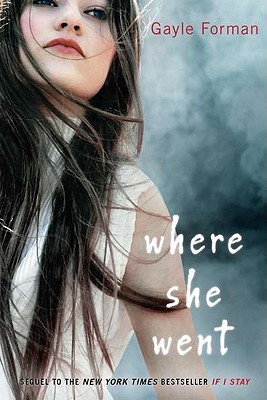
Where She Went (If I Stay, #2)Slammed (Slammed, #1)Trish Dollar Something Like Normal

Just like YA, NA is amazing and important to everyone looking to read about someone going through the same things that they are. It's just at a different point in life, and answers different questions. It surprises me how many authors don't want their books affiliated with the NA label. I say to them: Be trailblazers in this great emergence of a new genre! What do you think about this controversial topic?

Friday, April 26, 2013

New Adult Discussion: The Other Side of the Story

The New Adult category, itself, is a new trend, but there's something happening within it that I really haven't seen before. More and more authors in this category are beginning to write and release their books in the male point of view.

The most popular set is probably the Beautiful Disaster series.
Beautiful Disaster totally sweeps you up into it's tornado of intensity and then Walking Disaster is the exact same tornado, except it seems to be spinning the other way. In the first, we're all in Abbie's head, trying to figure Travis out. And then in the second we're privy to Travis's thoughts, and suddenly Abbie seems harder to understand (and maybe it's just me, but she's much more of a bitch than I thought she was), even though we've already heard her side. 

Now there are other great New Adult books that bring us into the head of the the dudes we've already fallen so hard for. 

Matt was so quiet through most of Flat-Out Love. Now we get to go into his head and find out what he was thinking and why he made certain decisions. 

The Slammed series played on this concept, but Colleen Hover did something pretty cool with it. She continued the story from Will's POV in Point of Retreat and then went back to the original story that Slammed told, also through Will's POV. In This Girl, Will is basically telling Layken his side of the story of how they met and fell in love. 

Molly McAdams has Stealing Harper coming out in June, which tells the story of Taking Chances through Chase's point of view. Which, if you've read Taking Chances you may know, is an interesting choice, given his role in the story. 

Now even Tammara Webber is talking about writing Lucas's story (as she mentioned on Facebook the other day...). It may not be the story of Easy retold from his POV, but if it were, I would love it. 

It just hit me the other day, how many of these books are surfacing. And really, when you boil it down, they're the same exact story, with slight variations for what may have been happening off the page in the original book, told from a new perspective. How are these authors managing to repackage a story and sell it all over again? For a moment, I actually felt a little duped. I loved reading Walking Disaster and I'm so anxious to read Matt's perspective. And PLEASE, oh please, let Tammara Webber write Easy from Lucas's perspective. But rather than letting myself feel a little taken advantage of for basically buying the same story twice, I actually stopped to think about why I'm so crazy about this new trend. 

And I think it's because I love to re-read books, but I don't have the time to do that anymore. Between my blog and my job, I have so much I need to be reading. So re-reading a book, when my TBR seems to multiply on a daily basis, just isn't plausible. It happens rarely. But with these books, I get to re-read while still reading a book I haven't read yet. It's genius, actually. I get to revisit these stories and get something obviously new out of it. I get to go back to these characters I've grown to love so much and still read something new. I'm loving it. 

This isn't to say every book should do this, and there are still books that pull of the multiple perspectives awesomely (Light in the Shadows by A. Meredith Walters and Fall Guy by Liz Reinhardt for example). But every once in awhile, books come along that are as  intense as Beautiful Disaster, as beautiful as Flat-Out Love or as heartbreaking as Slammed, and they go straight to your heart and the characters leave their imprints on you. These are the books that you want to go back to, not even just for the sake of seeing what the guy was doing while the girl was freaking out, or what he was thinking when he met her, or what he felt first time they did something naughty together. But because you get the chance to go back to this place and get a fuller picture of something you've already come to love. 

So what books would I like to read again from the guy's POV? 

Can we hear from Tucker in Give Me Something? Please! I'd love to know his side of this story, especially since he's pretty tricky himself. 

And I know Cora Carmack is writing companion novels to Losing It, which I'm SO excited about, but I'd still LOVE to hear from Garrick. I especially want to know what's going though his mind during the "Cat!" moment. (And actually, I DID just accidentally - on purpose - re-read Losing It, last week. Which I know, negates the whole, I don't have time to re-read, thing...but still...It was even better the second time around.)

**UPDATE: We ARE getting to read from Garrick's POV (if there are a certain number of pre-orders of Faking It): http://coracarmack.blogspot.com/2013/04/the-one-that-you-guys-are-going-to-love.html!!**

So my questions for you - what do you think of this trend? And what books would you like to re-read from the guy's perspective?

Wednesday, February 27, 2013

Guest Post - Juliana Haygert

I'm so excited to have Juliana Haygert, author of upcoming Destiny Gift, today talking New Adult and responding to ABC Nightline's report on this new category of books. If you want more NA, definitely check out Juliana over at NA Alley!

----------------------------

NA Isn't Sexed Up YA or Erotica
By Juliana Haygert

Disclaimer: I like my books, the ones I write and the ones I read, with at least a little romance in them, but my personal reading preferences don't include erotica. 

If you know what New Adult is, you've heard of ABC Nightline's piece about the subject. You haven't? Shame on you! I'll give you a chance to go read it or see it. Go. I'll wait. [taps foot and hums the new Belinda single]

Are you back? Are you as mad about the article as I am?

First, let's start by explaining New Adult is a category, not a genre. Category is related to age: middle grad, young adult, new adult, adult. Genre is the "flavor" of those categories: contemporary, paranormal, thriller, fantasy, sci-fi, etc.

Second, those reporters really don't know what they are talking about. New Adult isn't about sex and I can prove that with one simple statement: Slammed by Colleen Hoover, the book they talk so much about in that article has NO ssex scenes. NONE! So why do they state New Adult is Young Adult with Erotica, when there's no erotic element in the book they take as example? (note: I know the reporter said that Slammed has more sexual tension than sex, but, hey, if you're gonna accuse NA of being erotica, Slammed isn't the right book to drive your point home!)

And if you're thinking about Fifty Shades of Grey, that's another story. I know people, including some of my NA sisters, who consider the NA Erotica (NA = category, Erotica = genre). But I don't. To me, Erotica is Erotica. Otherwise you would have YA Erotica, MG Erotica, Adult Erotica...Anyway, I have a guess as to why people associate sex with New Adult, and the answer is in the same vein of whey people think New Adult is only contemporary. Being about college-aged characters, New Adult deals with sexuality a lot, and, since it's a new category, it deals with "real-life" issues (contemporary fiction), which includes sexual exploration.

My friend and author, Magan Vernon, wrote a blog post in response to ABC's article and I loved this sentence: New Adult is "about a period of life that yeah is going to be more sexually charged than a fifteen year old's"...So true! You can't run from it - much. But that doesn't mean that sex is the focus of the story. If you're in the writing business as we are, you heard a statement like this "sex shouldn't happen for the sake of sex. It has to be a natural part of the story, a step on the life of the character. It has to have a purpose, it has to change the characters"...And this is true for New Adult too. If you're reading NA books that are more smexy than others, it's because the topic it deals with is more smexy and sex is going to be part of a big change in the character's life.

As New Adult grows old, more genres will appear and soon we'll see an explosion of paranormal, urban fantasy, sci-fi and any other genre, dealing with those same issues, including sex. My NA Sister, Victoria H. Smith wrote a sci-fi, The Crimson Hunt, and though there's kissing, there's no sex. Carrie Butler, also my NA Sister, wrote a NA paranormal romance titled Strength that also only has kissing. Another one of my NA Sisters, Summer Lane, wrote a NA dystopia titled State of Emergency and there's no sex in it. My own paranormal romance, Destiny Gift, which comes out in April, has some kissing, but no sex.

What I'm trying to say is: sex is part of a college-aged person's life and is going to be part of our characters' lives, some way or another. But that doesn't mean it's crucial, it doesn't mean NA needs to have any sex. I've read a couple of NA urban fantasy and sci-fi that have no sex scenes and no kissing and even no sexual tension. It was all for the adventure - and these books are good! New Adult is about the character's reaction to the situation he lives in. A college-aged character will have to react to situations where he is confronted by sex - either because he wants/has it or because his roommate is horny.

The bottom line is: NA isn't YA with more sex. If you think it is, then I'm sorry, but you don't get it. NA is a phase in life where the character is on the path of self-discovery. He is growing up, trying to become an adult, but not feeling like one. And it's the way he reacts to the growing up part that make s in NA or not.

If you're still curious about NA, you can read more on its definition and a list of books separated by genre on NA Alley.

Thanks, Hannah, for having me and putting up with my rant!

----------------------------

About Juliana: While Juliana Haygert dreams of being Wonder Woman, Buffy, or a blood elf shadow priest, she settles for the less exciting - but equally gratifying - life of a wife, mother and author. Thousands of miles away from her former home in Brazil, she now resides in Connecticut and spends her days writing about kick-ass heroines and the heroes who drive them crazy. 
Find her online: NA Alley :: Twitter :: Facebook


Make sure you watch out for her upcoming novel Destiny Gift out on April 9, 2013! 

About Destiny GiftThirty years in the future, a sinister New York City exists in permanent darkness. 
A student at the secured NYU, nineteen-year-old Nadine has visions of Victor Gianni, an imaginary guy she has real feelings for. Afraid of being truly insane, she explains the visions away as simple daydreams, but she can no longer deny them when she bumps into Victor in real life. But this Victor doesn’t know her, and turns her away. After the encounter, Nadine’s visions change to those of eerie fates, gods she’s never heard of, demons with sharp claws they are not too timid to use … and instructions.
To discover if she’s losing her mind, Nadine follows the vague directions—with the real, rude and reluctant Victor—leading to a man who knows it all: Nadine can restore an ancient creed by unveiling the clues on her visions, and bring sunlight and peace to the world again. But that’s only if the demons and the other evil forces behind the darkness don’t stop her first.

Tuesday, May 22, 2012

Insurgent and Revolution in Literature

I don't want to give you all another review of Insurgent. It's a huge book right now, plenty of other people have already written great reviews. Here are my thoughts in a couple sentences:  I thought it was awesome, it made me cry, and it left me screaming for book three. I love Four and Tris, but I could also probably rant about their relationship for hours. But this was a stellar second book in the Divergent series. If you want to read other Insurgent reviews, I'd suggest checking these out:
Refracted Light Reviews ::: Book and a Latte ::: Good Choice Reading ::: YA Book Bridges ::: The Life of Fiction :: Sash and Em

What I do want to talk about here is revolution. I'm going to warn you now that if you haven't read Divergent, you should probably stop reading this post (because I'll probably spoil a few things) and go read the book instead.

I came to this topic because of my mother. She's currently editing her novel that is set during the Russian Revolution and she was reading passages to me that involve chaos and terror. My mom's a brilliant writer, so I was actually brought to tears, and it wasn't just because these characters were in the middle of something violent that they couldn't control but because those characters are representative of real people who actually had to endure such terror. We got to talking about revolution and she brought up her conflicted emotions when, last fall, she was writing these scenes and people were calling for revolution in the States. She questioned whether people really understand what revolution really is.

Which is where I want to go with this. What is revolution? Its goal is to overthrow a system or government or a radical change in social structure (adapted from dictionary.com). These things don't just happen and rarely do they happen peacefully. But the idea of it, I think, has become an ideal. Something that we hold as a possibility. Something that we all hold on to. Other people have been able to rise up and change things in the past, so if we need to, we could do it again. Through history and literature, the notion has become a romantic and hopeful possibility. But I think it's important that revolution is also coupled with this chaos and terror that is so often glossed over. For every man who dies an honorable death, there are, at least, handful of people left to mourn him. A handful of people who have to adjust to devastation and loss.

As much as we all hope for it, peace on Earth isn't likely. We all have different ideas and values, which doesn't always lend itself to sharing and hugs. But we can't wage war over every disagreement. So where do you draw the line between just being unhappy with the current structure and instigating an overthrow of that structure? When is revolution called for?

So coming back to Insurgent, I can't help but wonder if revolution was the answer here. Maybe Tris and Four aren't exactly leading a revolution, since they were victims of the first overthrow of power, but they act like revolutionaries. They spend the book finding refuge where they can and planning ways to change the order of power. There were a lot of hard decisions everyone had to make. After Erudite kind of takes control everyone is sort of suspended in inaction. The Dauntless faction reached a point where they had to do something and I really can't imagine what else they'd do. But when it culminates in assembling troops and rebelling with violence, I felt very uncomfortable. Because here's the other thing - people wind up on different sides for different reasons - and sometimes an individual may not be getting all the information. Their choice in alliance can be innocent, uninformed, or maybe even passive. Yet, when it comes to revolution, everyone is exposed to violence. I'm sorry if this is slightly spoilery, but I promise it won't completely alter the book if you haven't read it yet - but the moment a minor character who's allowed a few quips and lines, enough to make him a real person, is killed and they barely bat an eyelash, I became angry with the characters in the book.

I'm bordering on rambling here, so I'm going to wrap this up - but what I want to say is Insurgent really got me thinking about the way revolution is portrayed in literature. We read this story through Tris, who was trained in Dauntless, who believes in action and so in some ways there are violent actions that are glorified. In other ways, it is depicted as tragic. But when that minor character dies and it barely registers in the story line, I have to wonder if it's a desensitization to the tragedy and chaos that accompanies revolution. His death is glossed over, chalked up to the cost of revolution, and somehow that cost is deemed worth the outcome.

So the system wasn't working, and their aren't a lot of options. I really don't know what other choices there are to make in situations like this - but I think it's important to keep in mind that even in fictional representations of revolution, those people still represent others who have actually lived through such horror. It's not glamorous. It's not always worth the cost.

These are just a few thoughts I thought I'd put out there. What do you think about the way revolution is portrayed? I'd really like to know your thoughts.

Sunday, April 29, 2012

My Blogger Pledge

I'm fairly new to the book blogging community, but I've been around to see dramas come and go - from author attacks on bloggers, to bloggers attacking each other. But this week has pushed me past my limit. The hippie in me just wants to step in and say, "Peace, Love, and Good Books, people." That's what it's all about. I've seen all the attacks going back and forth and read enough posts to make informed decisions for myself - but as none of these battles were my own, I've kept quiet.
Until a blogger used a serious situation which involved one blogger and turned it around to accuse the entire book blogging community. I have to say I was seriously offended and I was certainly not the only one. Still, I felt like responding to that post would only feed her power, so I didn't say anything then and it's why I'm not linking the post here.
There are always going to be bullies, but if you can control the situation and not give the bully power - their accusations won't hold as much weight. But really, if you don't support their opinion, by all means voice your own opinion, but please don't attack.

So I want to write here my own pledge as an individual who has made the decision to join the book blogging community. I'm sure there are other versions of this out there, but these are the values I feel are important to uphold.

My Pledge:
I understand that by blogging about books, I have joined a community. I understand that the book blogging community is well established and is composed of fierce, smart, and passionate individuals. 
I reserve the right to decide what content is published on my own blog, so long as the words are my own or the proper credit is given. I believe I have the right to my opinion; therefore, I respect that others may have their own opinion as well. 
If I don't agree with an opinion and feel the need to join the conversation, I will state my views and support my beliefs without purposely provoking anger or attacking the opposing side. If I cannot join a discussion in a thoughtful way, I will not join it at all. 
If another blogger makes a mistake, I reserve the right to make my own judgement and will respect others' right to do so as well.
I will never degrade or verbally attack another blogger, author, or publisher.
I will always remember that I represent a group of people and I will do my best in my part to keep the blogging community a safe place to discuss and voice opinions.
I will remember that I should treat others as I wish to be treated.
I will always do my best to be original in my content and stay true to my own self.
I will always respect the book blogging community. 
Now, please, can we remember why we're here? The good books and the lovely people who love those books. We all have the same love, so can't we all just be friends?

Sunday, April 1, 2012

Legitimizing YA Lit

After reading Joel Stein's recent column, and nearly ranting on Facebook, I've decided to just get out my view of young adult literature and why the world needs to sit up and take YA lit seriously.

I've only recently stood straight when I tell people I read young adult literature, only recently have I begun sharing this love of mine with my friends and family. There is a a bit of that Twilight-tinge to any mention of young adult. The Twilight saga is really, a small sliver of this vibrant field, yet it is the most recognized. So when you say - young adult, most people think - well, what is that, like vampires and stuff? Well, some of it is, and you can categorize by vampires and faeries, angels and werewolves, real teens facing real problems, oppressive governments, or in the words of Joel Stein, "games you play when hungry." But breaking YA down into those categories often allows the outside world to squeeze an entire field into a stereotype. Cheerleader, jock, goth, loser, bad seed are labels used to place people into nice categories so no one really has to take the time to break down an individual. Same with YA lit. Call something a dystopia and it's just like The Hunger Games. If it's paranormal, it goes in the Twilight category. The same way people don't completely fit into any one category (with few exceptions of course) neither do books.

Categorizations are nice for readers to be able to determine at a glance whether a book is right for him/her. The problem is, these labels are swallowing the field and presenting a shallow face to those who aren't readers. Or those who are pretentious readers of adult literature only. I want to circle back to Joel Stein's assertion that adults should read only books written for adults, where he says that seeing a grown man reading The Hunger Games, is just embarrassing. Here's my issue with that statement: what exactly is he defining as a book written for adults? The literary canon is littered with books that, had they been published within the last decade or so, they would likely have been labeled YA.

Pride and Prejudice, for example. Elizabeth Bennet and her younger sisters on the quest for the perfect man, complete with handsome soldiers and lots of dancing. Sounds like YA to me.
Even a good portion of Wuthering Heights depicts teen angst. A number of gothic novels have young heroines and supernatural elements. My Antonia is narrated by a teenage boy. Or look at Daisy Miller or Holden Caulfield. Or Lord of the Rings for crying out loud. How about Charles Dickens? Oliver Twist was not an adult, nor was Esther from Bleak House. Let's not forget that Charles Dickens published his books serially, so the fact that YA lit often gains its readers by presenting stories in series should not be completely snubbed. The recognition of YA is relatively new, but really it's not a new concept.

Matt de la Peña wrote an article contributing to this discussion and he states, "I believe many of tomorrow's canon can be found in today's young adult section." I agree with this whole-heartedly, especially considering what has made it into the canon in the past. But also because YA is like any other field of literature - it has its publications that are probably better forgotten by contemporary collective conscious, there are publications that are wonderful as entertainment, and there are those that contribute to a conversation.  

There are books I read in the YA field where I stop and think that a century from now this will be held as an example of what was going on in our world here in the beginning of the 21st century. Brooklyn, Burning by Steve Brezenoff is one I think will withstand the test of time - others, I feel, have that potential as well include the incredible Imaginary Girls by Nova Ren Suma, The Book Thief by Marcus Zusak, Everybody Sees the Ants by A.S. King, Ship Breaker by Paolo Bacigalupi, or anything that John Green has written or will ever write.


These books are already showing up in high school curriculum. Like it or not, sooner or later the "adults" in this world will be the people who grew up reading YA lit. But what is even more awesome, should you choose to embrace it, is that we have this incredible opportunity to read these books when they're first surfacing. I can only imagine how incredible it will be to tell my grand kids that I read Harry Potter when the first book came out in the late 90's. Or that I can still remember the first time I read John Green. Or that The Giver was one of my favorite childhood books. I can imagine passing my collection of books down and having that mean something.
YA is the future of literature and for personal and collective reasons, I sincerely hope that the outside world - whether we're talking about pop culture, business, or academics - will come to see it as a legitimate field.

I'd love to know what you think about YA and the future of literature. You can also read more about the New York Times debate here.
Showing posts with label discussion. Show all posts

Monday, June 24, 2013

Addicted to New Adult: How I Fell for New Adult

The amazing New Leaf Literary is running the Addicted to New Adult event and I'm so happy to be a part of it. You can read the kick-off post here. So here's why/how I fell for New Adult and make sure you check out the killer giveaway at the end.
-------------------------------------
I fell for New Adult the same way I fell for YA. I read something a little different than what I was used to reading and it consumed me. Everything I read was an attempt to get back to that feeling of something new, exciting and encompassing. For New Adult, it was Beautiful Disaster that sucked me in. I’ve had the ebook version with the colorful tongue cover on my computer for ages, but it wasn’t until it was picked up, repackaged, and people were raving about it that I decided to finally read it. You know how readers always say, “I devoured that book.” Well, this book devoured me. I was so caught up in the story and the intensity, it crawled under my skin and left me wanting more. So I picked up Easy and Flat-Out Love and everything else that bore the NA label, if only because I associated that with Beautiful Disaster.
That’s how it happened. Why it happened is a realization that has come to me more slowly. New adult is reason vs. passion (Losing It reference…) after all and we can love things without ever knowing why, but passion burns and if you have reason left over it’s a love that can last a long time. I’ve actually spent a lot of time figuring out this field and what it is that draws me to it, what it is that makes me territorial and defensive.
The first is the romance aspect. I will (figuratively) slay people who lump NA in with erotica or call it sexed up YA.  However, romance is an important part of NA, the same way romance has a tendency to be a big part of YA – or literary fiction for that matter. Relationships are integral to a human life – whether you have them or not. I don’t know about you, but my life is has a tendency to revolve around other people. And I often think back on my life in terms of what boy I liked during that time. So, the best way I connect with a character is through his/her relationships with friends, family, and, yeah, the romantic interest. And with NA, that romantic interest is generally such a prominent part of the story that I feel strongly connected to both the main character and the dude she’s falling for.
The other thing I’ve begun to notice the more I read is how nostalgic it makes me. It’s weird, because I’ve read so many YA novels and never pined for my high school days. NA never fails to make me miss college – at least the novels where the characters are in college. I miss the freedom and the excitement of feeling grown up but still really pretty naïve. I miss parties and only having class Monday – Thursday for a few hours a day. I miss working a minimum wage job with very little pressure. I learned who I was in college. I mean, I’m still figuring it out, but I learned a lot about trust, friendship, responsibility, boys, and balance when I was given that huge amount of independence. The most important thing was, I figured out how to take care of myself. I think a lot of YA is figuring out who you are, and NA is about figuring out with to do with your life. And that still resonates across many age groups.
I love YA because everything feels urgent and like the end of the world. The stakes are always high and the relationships are intense and exciting. In NA, you do get a lot of the same angst that comes with YA, but you also get the nervous energy of being (seemingly) alone in the world for the first time, you get a person colored by their high school past, and often that includes romantic experience, bringing relationships to a much more passionate level. Long story short, I fell for NA because I connect with these characters so intensely - they are simultaniously reminders of who I was and who I am now.
------------------------------------------ 
Thursday, May 16, 2013

New Adult Discussion: Why NA is a Relevant Genre

::Post by Jackie Lindert::

I'm going to start this post by saying that I love New Adult (NA). I think it is more than just a marketing strategy, and it deserves to be recognized as separate, important genre.It's not YA. It's not adult fiction. It's NA, and it is awesome.


I think it goes without being said (despite the fact that I'm saying it anyway) that I am a big fan of YA. I read about it, blog about it, and love it. I see people all over the map about YA, both authors and readers. Some think NA is just sexier YA, some think it's straight up erotica (I hate when people generalize all NA as erotica!), and some think it isn't even a real classification--most books falling into either YA or romance/fiction for adults. Well I am here to say that it is about time there is a new, not a revived or pre-existing, genre for these books.

I will say that I believe NA did morph out of the YA genre. I say that having studied sociology and psychology and other fancy -ologies that make me feel qualified to give the following opinion:

It takes longer for "kids" today to grow up. We are the generation that is coddled, over-protected, and get prizes just for participating. I'm not saying whether that is good or bad, but just hear me out. There is an actual term for the parents of our time: Helicopter parents. They hover! College students have their parents scheduling their classes and graduates have moms going with them on interviews (horrifying!). My Dad told me that when he was 18 and moved to college, he phoned his parents once a month and saw them on holidays. Going to college was goodbye parents; hello independence. Blame it on cell phones or parents compensating for the naughty lives they led as teens and young 20-somethings, but times are different.

The point of all that is this: NA for post-high school kids is what YA was for teens of past generations. Think of all the soul searching and self finding that happens in all the classic YA novels:

The Catcher in the RyeThe Perks of Being a WallflowerThe Outsiders

All these coming-of-age books were helping people deal with serious issues and getting ready for them to become an adult (as in a YOUNG adult! It all makes sense!). But, thanks to society and helicopter parents, it takes people longer to come of age and be independent. NA helps those of us who graduated high school and/or college, and are just now getting our life sorted and figured out. Here are some great examples of NA books where the character comes into their own for the first time even though they are older than 17:

Where She Went (If I Stay, #2)Slammed (Slammed, #1)Trish Dollar Something Like Normal

Just like YA, NA is amazing and important to everyone looking to read about someone going through the same things that they are. It's just at a different point in life, and answers different questions. It surprises me how many authors don't want their books affiliated with the NA label. I say to them: Be trailblazers in this great emergence of a new genre! What do you think about this controversial topic?

Friday, April 26, 2013

New Adult Discussion: The Other Side of the Story

The New Adult category, itself, is a new trend, but there's something happening within it that I really haven't seen before. More and more authors in this category are beginning to write and release their books in the male point of view.

The most popular set is probably the Beautiful Disaster series.
Beautiful Disaster totally sweeps you up into it's tornado of intensity and then Walking Disaster is the exact same tornado, except it seems to be spinning the other way. In the first, we're all in Abbie's head, trying to figure Travis out. And then in the second we're privy to Travis's thoughts, and suddenly Abbie seems harder to understand (and maybe it's just me, but she's much more of a bitch than I thought she was), even though we've already heard her side. 

Now there are other great New Adult books that bring us into the head of the the dudes we've already fallen so hard for. 

Matt was so quiet through most of Flat-Out Love. Now we get to go into his head and find out what he was thinking and why he made certain decisions. 

The Slammed series played on this concept, but Colleen Hover did something pretty cool with it. She continued the story from Will's POV in Point of Retreat and then went back to the original story that Slammed told, also through Will's POV. In This Girl, Will is basically telling Layken his side of the story of how they met and fell in love. 

Molly McAdams has Stealing Harper coming out in June, which tells the story of Taking Chances through Chase's point of view. Which, if you've read Taking Chances you may know, is an interesting choice, given his role in the story. 

Now even Tammara Webber is talking about writing Lucas's story (as she mentioned on Facebook the other day...). It may not be the story of Easy retold from his POV, but if it were, I would love it. 

It just hit me the other day, how many of these books are surfacing. And really, when you boil it down, they're the same exact story, with slight variations for what may have been happening off the page in the original book, told from a new perspective. How are these authors managing to repackage a story and sell it all over again? For a moment, I actually felt a little duped. I loved reading Walking Disaster and I'm so anxious to read Matt's perspective. And PLEASE, oh please, let Tammara Webber write Easy from Lucas's perspective. But rather than letting myself feel a little taken advantage of for basically buying the same story twice, I actually stopped to think about why I'm so crazy about this new trend. 

And I think it's because I love to re-read books, but I don't have the time to do that anymore. Between my blog and my job, I have so much I need to be reading. So re-reading a book, when my TBR seems to multiply on a daily basis, just isn't plausible. It happens rarely. But with these books, I get to re-read while still reading a book I haven't read yet. It's genius, actually. I get to revisit these stories and get something obviously new out of it. I get to go back to these characters I've grown to love so much and still read something new. I'm loving it. 

This isn't to say every book should do this, and there are still books that pull of the multiple perspectives awesomely (Light in the Shadows by A. Meredith Walters and Fall Guy by Liz Reinhardt for example). But every once in awhile, books come along that are as  intense as Beautiful Disaster, as beautiful as Flat-Out Love or as heartbreaking as Slammed, and they go straight to your heart and the characters leave their imprints on you. These are the books that you want to go back to, not even just for the sake of seeing what the guy was doing while the girl was freaking out, or what he was thinking when he met her, or what he felt first time they did something naughty together. But because you get the chance to go back to this place and get a fuller picture of something you've already come to love. 

So what books would I like to read again from the guy's POV? 

Can we hear from Tucker in Give Me Something? Please! I'd love to know his side of this story, especially since he's pretty tricky himself. 

And I know Cora Carmack is writing companion novels to Losing It, which I'm SO excited about, but I'd still LOVE to hear from Garrick. I especially want to know what's going though his mind during the "Cat!" moment. (And actually, I DID just accidentally - on purpose - re-read Losing It, last week. Which I know, negates the whole, I don't have time to re-read, thing...but still...It was even better the second time around.)

**UPDATE: We ARE getting to read from Garrick's POV (if there are a certain number of pre-orders of Faking It): http://coracarmack.blogspot.com/2013/04/the-one-that-you-guys-are-going-to-love.html!!**

So my questions for you - what do you think of this trend? And what books would you like to re-read from the guy's perspective?

Wednesday, February 27, 2013

Guest Post - Juliana Haygert

I'm so excited to have Juliana Haygert, author of upcoming Destiny Gift, today talking New Adult and responding to ABC Nightline's report on this new category of books. If you want more NA, definitely check out Juliana over at NA Alley!

----------------------------

NA Isn't Sexed Up YA or Erotica
By Juliana Haygert

Disclaimer: I like my books, the ones I write and the ones I read, with at least a little romance in them, but my personal reading preferences don't include erotica. 

If you know what New Adult is, you've heard of ABC Nightline's piece about the subject. You haven't? Shame on you! I'll give you a chance to go read it or see it. Go. I'll wait. [taps foot and hums the new Belinda single]

Are you back? Are you as mad about the article as I am?

First, let's start by explaining New Adult is a category, not a genre. Category is related to age: middle grad, young adult, new adult, adult. Genre is the "flavor" of those categories: contemporary, paranormal, thriller, fantasy, sci-fi, etc.

Second, those reporters really don't know what they are talking about. New Adult isn't about sex and I can prove that with one simple statement: Slammed by Colleen Hoover, the book they talk so much about in that article has NO ssex scenes. NONE! So why do they state New Adult is Young Adult with Erotica, when there's no erotic element in the book they take as example? (note: I know the reporter said that Slammed has more sexual tension than sex, but, hey, if you're gonna accuse NA of being erotica, Slammed isn't the right book to drive your point home!)

And if you're thinking about Fifty Shades of Grey, that's another story. I know people, including some of my NA sisters, who consider the NA Erotica (NA = category, Erotica = genre). But I don't. To me, Erotica is Erotica. Otherwise you would have YA Erotica, MG Erotica, Adult Erotica...Anyway, I have a guess as to why people associate sex with New Adult, and the answer is in the same vein of whey people think New Adult is only contemporary. Being about college-aged characters, New Adult deals with sexuality a lot, and, since it's a new category, it deals with "real-life" issues (contemporary fiction), which includes sexual exploration.

My friend and author, Magan Vernon, wrote a blog post in response to ABC's article and I loved this sentence: New Adult is "about a period of life that yeah is going to be more sexually charged than a fifteen year old's"...So true! You can't run from it - much. But that doesn't mean that sex is the focus of the story. If you're in the writing business as we are, you heard a statement like this "sex shouldn't happen for the sake of sex. It has to be a natural part of the story, a step on the life of the character. It has to have a purpose, it has to change the characters"...And this is true for New Adult too. If you're reading NA books that are more smexy than others, it's because the topic it deals with is more smexy and sex is going to be part of a big change in the character's life.

As New Adult grows old, more genres will appear and soon we'll see an explosion of paranormal, urban fantasy, sci-fi and any other genre, dealing with those same issues, including sex. My NA Sister, Victoria H. Smith wrote a sci-fi, The Crimson Hunt, and though there's kissing, there's no sex. Carrie Butler, also my NA Sister, wrote a NA paranormal romance titled Strength that also only has kissing. Another one of my NA Sisters, Summer Lane, wrote a NA dystopia titled State of Emergency and there's no sex in it. My own paranormal romance, Destiny Gift, which comes out in April, has some kissing, but no sex.

What I'm trying to say is: sex is part of a college-aged person's life and is going to be part of our characters' lives, some way or another. But that doesn't mean it's crucial, it doesn't mean NA needs to have any sex. I've read a couple of NA urban fantasy and sci-fi that have no sex scenes and no kissing and even no sexual tension. It was all for the adventure - and these books are good! New Adult is about the character's reaction to the situation he lives in. A college-aged character will have to react to situations where he is confronted by sex - either because he wants/has it or because his roommate is horny.

The bottom line is: NA isn't YA with more sex. If you think it is, then I'm sorry, but you don't get it. NA is a phase in life where the character is on the path of self-discovery. He is growing up, trying to become an adult, but not feeling like one. And it's the way he reacts to the growing up part that make s in NA or not.

If you're still curious about NA, you can read more on its definition and a list of books separated by genre on NA Alley.

Thanks, Hannah, for having me and putting up with my rant!

----------------------------

About Juliana: While Juliana Haygert dreams of being Wonder Woman, Buffy, or a blood elf shadow priest, she settles for the less exciting - but equally gratifying - life of a wife, mother and author. Thousands of miles away from her former home in Brazil, she now resides in Connecticut and spends her days writing about kick-ass heroines and the heroes who drive them crazy. 
Find her online: NA Alley :: Twitter :: Facebook


Make sure you watch out for her upcoming novel Destiny Gift out on April 9, 2013! 

About Destiny GiftThirty years in the future, a sinister New York City exists in permanent darkness. 
A student at the secured NYU, nineteen-year-old Nadine has visions of Victor Gianni, an imaginary guy she has real feelings for. Afraid of being truly insane, she explains the visions away as simple daydreams, but she can no longer deny them when she bumps into Victor in real life. But this Victor doesn’t know her, and turns her away. After the encounter, Nadine’s visions change to those of eerie fates, gods she’s never heard of, demons with sharp claws they are not too timid to use … and instructions.
To discover if she’s losing her mind, Nadine follows the vague directions—with the real, rude and reluctant Victor—leading to a man who knows it all: Nadine can restore an ancient creed by unveiling the clues on her visions, and bring sunlight and peace to the world again. But that’s only if the demons and the other evil forces behind the darkness don’t stop her first.

Tuesday, May 22, 2012

Insurgent and Revolution in Literature

I don't want to give you all another review of Insurgent. It's a huge book right now, plenty of other people have already written great reviews. Here are my thoughts in a couple sentences:  I thought it was awesome, it made me cry, and it left me screaming for book three. I love Four and Tris, but I could also probably rant about their relationship for hours. But this was a stellar second book in the Divergent series. If you want to read other Insurgent reviews, I'd suggest checking these out:
Refracted Light Reviews ::: Book and a Latte ::: Good Choice Reading ::: YA Book Bridges ::: The Life of Fiction :: Sash and Em

What I do want to talk about here is revolution. I'm going to warn you now that if you haven't read Divergent, you should probably stop reading this post (because I'll probably spoil a few things) and go read the book instead.

I came to this topic because of my mother. She's currently editing her novel that is set during the Russian Revolution and she was reading passages to me that involve chaos and terror. My mom's a brilliant writer, so I was actually brought to tears, and it wasn't just because these characters were in the middle of something violent that they couldn't control but because those characters are representative of real people who actually had to endure such terror. We got to talking about revolution and she brought up her conflicted emotions when, last fall, she was writing these scenes and people were calling for revolution in the States. She questioned whether people really understand what revolution really is.

Which is where I want to go with this. What is revolution? Its goal is to overthrow a system or government or a radical change in social structure (adapted from dictionary.com). These things don't just happen and rarely do they happen peacefully. But the idea of it, I think, has become an ideal. Something that we hold as a possibility. Something that we all hold on to. Other people have been able to rise up and change things in the past, so if we need to, we could do it again. Through history and literature, the notion has become a romantic and hopeful possibility. But I think it's important that revolution is also coupled with this chaos and terror that is so often glossed over. For every man who dies an honorable death, there are, at least, handful of people left to mourn him. A handful of people who have to adjust to devastation and loss.

As much as we all hope for it, peace on Earth isn't likely. We all have different ideas and values, which doesn't always lend itself to sharing and hugs. But we can't wage war over every disagreement. So where do you draw the line between just being unhappy with the current structure and instigating an overthrow of that structure? When is revolution called for?

So coming back to Insurgent, I can't help but wonder if revolution was the answer here. Maybe Tris and Four aren't exactly leading a revolution, since they were victims of the first overthrow of power, but they act like revolutionaries. They spend the book finding refuge where they can and planning ways to change the order of power. There were a lot of hard decisions everyone had to make. After Erudite kind of takes control everyone is sort of suspended in inaction. The Dauntless faction reached a point where they had to do something and I really can't imagine what else they'd do. But when it culminates in assembling troops and rebelling with violence, I felt very uncomfortable. Because here's the other thing - people wind up on different sides for different reasons - and sometimes an individual may not be getting all the information. Their choice in alliance can be innocent, uninformed, or maybe even passive. Yet, when it comes to revolution, everyone is exposed to violence. I'm sorry if this is slightly spoilery, but I promise it won't completely alter the book if you haven't read it yet - but the moment a minor character who's allowed a few quips and lines, enough to make him a real person, is killed and they barely bat an eyelash, I became angry with the characters in the book.

I'm bordering on rambling here, so I'm going to wrap this up - but what I want to say is Insurgent really got me thinking about the way revolution is portrayed in literature. We read this story through Tris, who was trained in Dauntless, who believes in action and so in some ways there are violent actions that are glorified. In other ways, it is depicted as tragic. But when that minor character dies and it barely registers in the story line, I have to wonder if it's a desensitization to the tragedy and chaos that accompanies revolution. His death is glossed over, chalked up to the cost of revolution, and somehow that cost is deemed worth the outcome.

So the system wasn't working, and their aren't a lot of options. I really don't know what other choices there are to make in situations like this - but I think it's important to keep in mind that even in fictional representations of revolution, those people still represent others who have actually lived through such horror. It's not glamorous. It's not always worth the cost.

These are just a few thoughts I thought I'd put out there. What do you think about the way revolution is portrayed? I'd really like to know your thoughts.

Sunday, April 29, 2012

My Blogger Pledge

I'm fairly new to the book blogging community, but I've been around to see dramas come and go - from author attacks on bloggers, to bloggers attacking each other. But this week has pushed me past my limit. The hippie in me just wants to step in and say, "Peace, Love, and Good Books, people." That's what it's all about. I've seen all the attacks going back and forth and read enough posts to make informed decisions for myself - but as none of these battles were my own, I've kept quiet.
Until a blogger used a serious situation which involved one blogger and turned it around to accuse the entire book blogging community. I have to say I was seriously offended and I was certainly not the only one. Still, I felt like responding to that post would only feed her power, so I didn't say anything then and it's why I'm not linking the post here.
There are always going to be bullies, but if you can control the situation and not give the bully power - their accusations won't hold as much weight. But really, if you don't support their opinion, by all means voice your own opinion, but please don't attack.

So I want to write here my own pledge as an individual who has made the decision to join the book blogging community. I'm sure there are other versions of this out there, but these are the values I feel are important to uphold.

My Pledge:
I understand that by blogging about books, I have joined a community. I understand that the book blogging community is well established and is composed of fierce, smart, and passionate individuals. 
I reserve the right to decide what content is published on my own blog, so long as the words are my own or the proper credit is given. I believe I have the right to my opinion; therefore, I respect that others may have their own opinion as well. 
If I don't agree with an opinion and feel the need to join the conversation, I will state my views and support my beliefs without purposely provoking anger or attacking the opposing side. If I cannot join a discussion in a thoughtful way, I will not join it at all. 
If another blogger makes a mistake, I reserve the right to make my own judgement and will respect others' right to do so as well.
I will never degrade or verbally attack another blogger, author, or publisher.
I will always remember that I represent a group of people and I will do my best in my part to keep the blogging community a safe place to discuss and voice opinions.
I will remember that I should treat others as I wish to be treated.
I will always do my best to be original in my content and stay true to my own self.
I will always respect the book blogging community. 
Now, please, can we remember why we're here? The good books and the lovely people who love those books. We all have the same love, so can't we all just be friends?

Sunday, April 1, 2012

Legitimizing YA Lit

After reading Joel Stein's recent column, and nearly ranting on Facebook, I've decided to just get out my view of young adult literature and why the world needs to sit up and take YA lit seriously.

I've only recently stood straight when I tell people I read young adult literature, only recently have I begun sharing this love of mine with my friends and family. There is a a bit of that Twilight-tinge to any mention of young adult. The Twilight saga is really, a small sliver of this vibrant field, yet it is the most recognized. So when you say - young adult, most people think - well, what is that, like vampires and stuff? Well, some of it is, and you can categorize by vampires and faeries, angels and werewolves, real teens facing real problems, oppressive governments, or in the words of Joel Stein, "games you play when hungry." But breaking YA down into those categories often allows the outside world to squeeze an entire field into a stereotype. Cheerleader, jock, goth, loser, bad seed are labels used to place people into nice categories so no one really has to take the time to break down an individual. Same with YA lit. Call something a dystopia and it's just like The Hunger Games. If it's paranormal, it goes in the Twilight category. The same way people don't completely fit into any one category (with few exceptions of course) neither do books.

Categorizations are nice for readers to be able to determine at a glance whether a book is right for him/her. The problem is, these labels are swallowing the field and presenting a shallow face to those who aren't readers. Or those who are pretentious readers of adult literature only. I want to circle back to Joel Stein's assertion that adults should read only books written for adults, where he says that seeing a grown man reading The Hunger Games, is just embarrassing. Here's my issue with that statement: what exactly is he defining as a book written for adults? The literary canon is littered with books that, had they been published within the last decade or so, they would likely have been labeled YA.

Pride and Prejudice, for example. Elizabeth Bennet and her younger sisters on the quest for the perfect man, complete with handsome soldiers and lots of dancing. Sounds like YA to me.
Even a good portion of Wuthering Heights depicts teen angst. A number of gothic novels have young heroines and supernatural elements. My Antonia is narrated by a teenage boy. Or look at Daisy Miller or Holden Caulfield. Or Lord of the Rings for crying out loud. How about Charles Dickens? Oliver Twist was not an adult, nor was Esther from Bleak House. Let's not forget that Charles Dickens published his books serially, so the fact that YA lit often gains its readers by presenting stories in series should not be completely snubbed. The recognition of YA is relatively new, but really it's not a new concept.

Matt de la Peña wrote an article contributing to this discussion and he states, "I believe many of tomorrow's canon can be found in today's young adult section." I agree with this whole-heartedly, especially considering what has made it into the canon in the past. But also because YA is like any other field of literature - it has its publications that are probably better forgotten by contemporary collective conscious, there are publications that are wonderful as entertainment, and there are those that contribute to a conversation.  

There are books I read in the YA field where I stop and think that a century from now this will be held as an example of what was going on in our world here in the beginning of the 21st century. Brooklyn, Burning by Steve Brezenoff is one I think will withstand the test of time - others, I feel, have that potential as well include the incredible Imaginary Girls by Nova Ren Suma, The Book Thief by Marcus Zusak, Everybody Sees the Ants by A.S. King, Ship Breaker by Paolo Bacigalupi, or anything that John Green has written or will ever write.


These books are already showing up in high school curriculum. Like it or not, sooner or later the "adults" in this world will be the people who grew up reading YA lit. But what is even more awesome, should you choose to embrace it, is that we have this incredible opportunity to read these books when they're first surfacing. I can only imagine how incredible it will be to tell my grand kids that I read Harry Potter when the first book came out in the late 90's. Or that I can still remember the first time I read John Green. Or that The Giver was one of my favorite childhood books. I can imagine passing my collection of books down and having that mean something.
YA is the future of literature and for personal and collective reasons, I sincerely hope that the outside world - whether we're talking about pop culture, business, or academics - will come to see it as a legitimate field.

I'd love to know what you think about YA and the future of literature. You can also read more about the New York Times debate here.